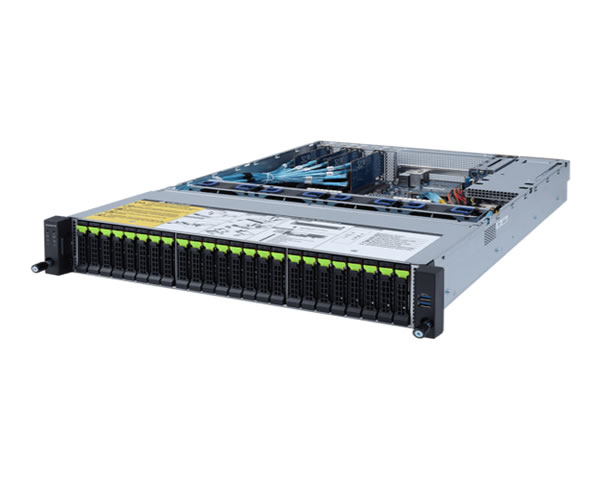
Introduction: Hong Kong CVMs refer to computing instances hosted in Hong Kong data centers, provided through virtualization and distributed resource pools. From a practical perspective, this article explains what Hong Kong cloud servers are used for and systematically compares them with traditional physical servers, helping readers make informed decisions when selecting and deploying solutions.
Hong Kong CVM What is it for? – Basic definition and purpose
Hong Kong CVM provides on-demand computing, storage, and networking capabilities to meet needs such as website hosting, application deployment, data backup and disaster recovery, development and testing, as well as cross-border operations. Its features include hourly or pay-as-you-go resource billing, fast startup and shutdown, and flexible adjustments, making it suitable for use cases that require elasticity and rapid deployment.
Typical Use Cases and Business Value
Common use cases include cross-border sites that provide low-latency access for users in mainland China and the Asia-Pacific region, elastic scaling for e-commerce promotions, mobile app backends, content distribution nodes, and testing environments and CI/CD pipelines. The Hong Kong node balances international export bandwidth with internal connectivity, making it suitable for businesses with dual requirements for low latency and compliance.
Technical Composition and Key Features
Hong Kong CVMs are built based on virtualization or containerization technologies. At the underlying level, they consist of compute nodes, distributed storage, virtual networks, and a management control plane. It provides standard features such as snapshots, images, elastic IPs, and load balancing, supports automated API and console management, making it easy to implement Infrastructure as Code (IaC).
Advantages of Elastic Scaling and Resource Pooling
Cloud servers achieve on-demand allocation through resource pooling, supporting horizontal scaling and vertical upgrade. Compared to traditional physical servers, it offers faster scaling capabilities and supports auto-scaling strategies. This enables better availability of services during traffic fluctuations, reduces costs associated with peak purchases and idle resources, and improves resource utilization.
Difference from traditional servers — Deployment and delivery speed
Traditional servers require purchasing, delivery, rack installation, and network configuration, which usually takes a long time ; In Hong Kong, cloud servers can have their instances created and network configurations set up within minutes or hours. Rapid delivery means that businesses can go live faster, enabling continuous iteration and quick rollbacks, thereby significantly improving delivery efficiency.
Differences in performance, reliability, and availability
Physical servers have advantages in terms of single-machine performance and dedicated hardware control, making them suitable for scenarios with strict requirements regarding latency or specialized equipment. Cloud servers improve availability through redundant architectures, snapshot backups, and multi-availability zone deployment, but under a shared resource model, attention must be paid to the impact of “neighbors” and performance stability.
Differences in operation, maintenance, and management
Cloud service providers typically offer automated management tools, monitoring alerts, and backup and recovery mechanisms to reduce the manual workload of traditional operations and maintenance. Users can achieve batch management and automated operations through APIs, whereas changes and scaling of traditional servers rely more on manual intervention and on-site operations, resulting in higher operational costs and response times.
Network, Latency, and Bandwidth Comparison
Hong Kong’s geographical location provides excellent links to international and mainland China, making it suitable for centralized distribution of cross-border traffic. Cloud environments allow for flexible configuration of Elastic IP addresses and bandwidth plans, but the ultimate experience is influenced by the supplier’s network architecture, link quality, and upstream operators. Applications sensitive to latency should be evaluated in real conditions.
Safety and compliance considerations
Hong Kong CVMs offer security features such as virtual network isolation, VPC, data encryption, permission control, and audit logs, which help meet various compliance requirements. When making a choice, attention should be paid to data sovereignty, backup strategies and compliance support provided by suppliers, as well as how security policies can be integrated into the continuous delivery process.
Practical tips for choosing a Hong Kong CVM
When selecting a solution, prioritize evaluating network links, scalability, backup and recovery capabilities, operational interfaces, and technical support responsiveness. Focus on cross-border services and dedicated lines or acceleration solutions for the Chinese mainland ; Consider hybrid deployment or dedicated hosts for critical business workloads to balance performance and isolation requirements.
Deployment and Migration Considerations
Before migrating to a Hong Kong CVM, it is necessary to conduct traffic assessment, data synchronization, and rollback planning, using snapshots or incremental replication to shorten the switching window. During the testing phase, network latency, concurrent throughput, and failure recovery processes are verified. Monitoring and alerting rules are established to ensure system stability and business continuity after migration.
Summary and Recommendations
Summary: Hong Kong CVMs are suitable for businesses that require rapid deployment, elastic scaling, and optimized cross-border access. Compared to traditional servers, it offers significant advantages in delivery speed, elasticity, and operational automation, but caution is still needed regarding performance isolation and high-performance scenarios. It is recommended to adopt a hybrid or layered deployment based on business characteristics, along with thorough network and security validation.
- Latest articles
- Use Vietnam's Native IP Cloud Server To Build A Private VPN And Corporate Intranet Acceleration Solution
- How To Choose The Appropriate HKEX Computer Room Server Configuration For Financial Business
- Common Misunderstandings Avoidance Guide On The Configuration And Maintenance Of Multiple IPs For US High-Defense Servers
- Beginner's Guide: How To Choose A Cloud Server In Hong Kong? Detailed Explanation Of Bandwidth Selection And Billing Methods
- Huawei Cloud Singapore Server Instance Selection Suggested Specification Comparison Table For Different Business Scenarios
- Comparative Study Of Differences In Construction Standards And Operation Models Between Indian And German Computer Rooms
- Practical Advice For Startups Facing The Decision Of Renting Or Hosting Servers In Hong Kong
- Enterprise Deployment Manual Korean Native IP Computer Room Location And Compliance Guide
- Vps Cambodia Buying Guide And Detailed Explanation Of Frequently Asked Questions Suitable For Novices Configuration Price Comparison Recommendation
- Cost And Benefit Assessment Of Cambodian Video Cloud Server Deployment For Media Companies
- Popular tags
-

Performance And Limitations Of Hong Kong Cloud Server For 10 Yuan A Year
explore the performance and limitations of hong kong cloud servers priced at 10 yuan per year, gain an in-depth understanding of its applicable scenarios and potential problems, and provide guidance for choosing appropriate cloud services. -

Advantages And Usage Guide Of Shenzhen Hong Kong VPS
This article explores the advantages of VPS in Shenzhen and Hong Kong, provides user guides to help users choose suitable VPS services. -

Deployment Scenarios And Cost-benefit Analysis Of Lightweight Cloud Server For Hong Kong Users
this article analyzes the typical deployment scenarios and cost-effectiveness of lightweight cloud servers from the perspective of hong kong users, covering technical characteristics, applicable scenarios, cost measurement methods, compliance and operation and maintenance suggestions, and helping enterprises formulate implementation strategies.